Key takeaways
- GHK is a tripeptide: glycine, histidine and lysine (Gly-His-Lys).
- It binds copper strongly; the copper complex is called GHK-Cu.
- It occurs naturally in human plasma and was first identified in 1973 [1].
- It is studied in skin, wound-healing and tissue-remodelling research, and more recently in gene-expression studies.
At a glance
| Full name | Glycyl-L-histidyl-L-lysine copper complex |
|---|---|
| Type | Copper-binding tripeptide |
| Found in | Human plasma; the GHK sequence is also part of type I collagen |
| Research areas | Skin and wound-healing models, tissue remodelling, gene expression |
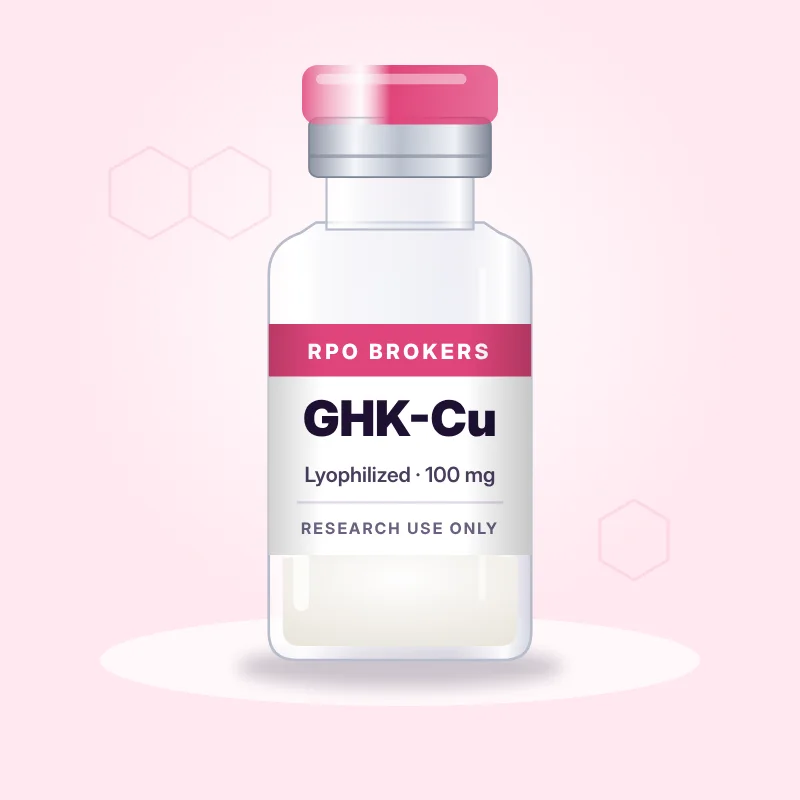
| At RPO Brokers | GHK-Cu · single vial and 10-vial kit |
Where it comes from
GHK is small enough to circulate in the blood, and its sequence also sits inside the alpha-2 chain of type I collagen. A review by Pickart and Margolina describes how it can be released at a site of tissue injury, which is one reason it has been studied as a signal in repair processes [1].
What researchers study
Animal and cell studies have looked at collagen and glycosaminoglycan synthesis, and at healing in wound models [1].
Using the Broad Institute’s Connectivity Map, researchers reported that GHK shifts the expression of a large share of human genes, opening new questions about how it works [1].
Related compounds
GHK-Cu is often studied alongside other tissue-repair peptides. Compare it with KPV and the KLOW blend, or browse all research peptides.
Frequently asked questions
Is GHK-Cu the same as GHK?
GHK is the peptide on its own. GHK-Cu is GHK bound to a copper ion, which is the form most often studied and supplied.
Is GHK-Cu sold for human use?
No. RPO Brokers supplies GHK-Cu strictly for laboratory research. It is not for human or veterinary use.
References
- Pickart L, Margolina A. Regenerative and protective actions of the GHK-Cu peptide in the light of the new gene data. Int J Mol Sci. 2018;19(7):1987. doi:10.3390/ijms19071987
This article is for educational purposes about laboratory research. It is not medical advice. Products mentioned are sold for research use only.